Pest Control Service in Chandler provides targeted Sonoran Desert barrier defense to stop scorpions, subterranean termites, and roof rats before they enter living areas. Homeowners across Maricopa County face intense seasonal pest pressures as summer pavement temperatures exceed 100 degrees Fahrenheit, driving venomous and wood-destroying insects directly indoors through foundation weep screeds and structural expansion gaps.
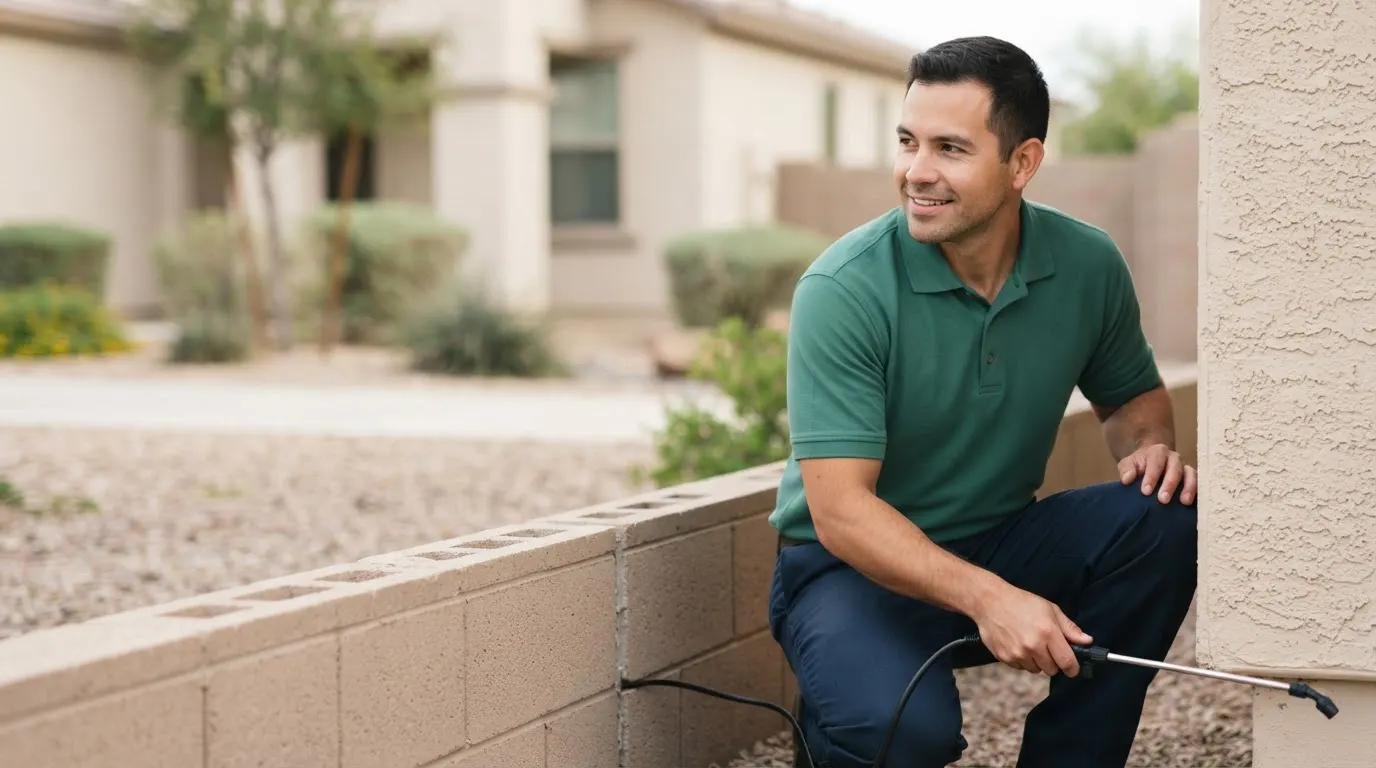
Pest Control Service in Chandler is an on-site structural defense protocol that eliminates desert pests like bark scorpions, subterranean termites, and roof rats using targeted perimeter treatments and entry-point exclusions without mandatory annual contracts.
Every service reflects the same meticulous attention to detail, whether it's a single job or a larger pest control service project across Chandler.
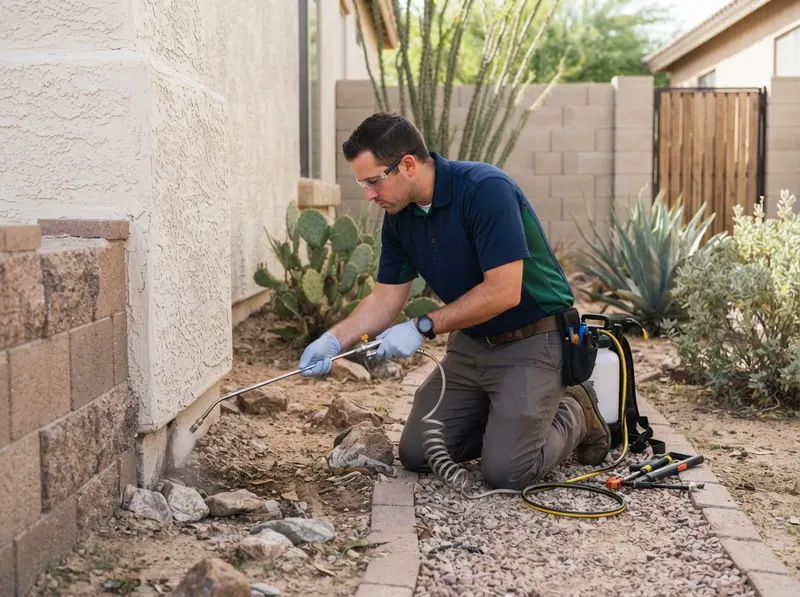
Protective defense against Arizona bark scorpions utilizing micro-encapsulated pyrethroid chemistry and nighttime ultraviolet blacklight inspections. Field technicians inspect exterior stem walls, concrete expansion joints, rock mulch beds, dry-stack travertine pavers, and utility penetration boxes to neutralize scorpions before they migrate into interior living zones. Treatments incorporate physical exclusion along stucco weep screeds, sealing entry gaps larger than one-sixteenth of an inch without restricting necessary wall ventilation or moisture drainage.
Get a quote →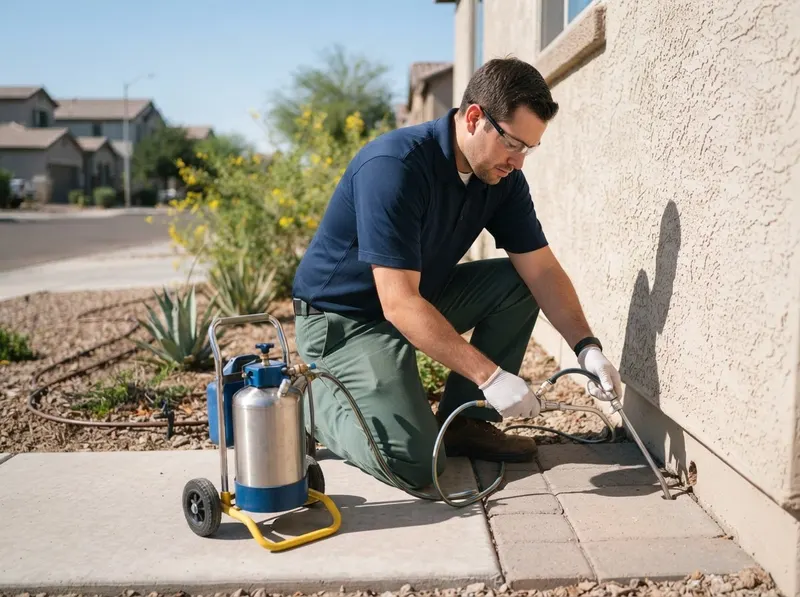
Subterranean termite elimination featuring non-repellent liquid termiticides applied through continuous perimeter soil trenching and concrete sub-slab injection. Technicians trench 6 inches wide and 6 inches deep along structural stem walls, applying 4 gallons of finished solution per 10 linear feet into Maricopa County clay soil. Abutting concrete surfaces, including front entryways, covered patios, and two-car driveways, are drilled at precise 12-inch intervals to establish an unbroken chemical barrier beneath the foundation footing.
Get a quote →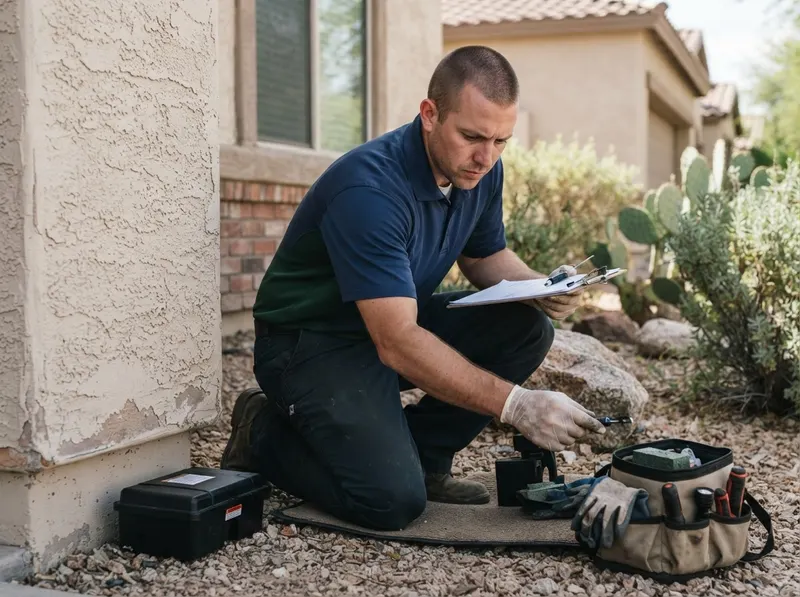
Comprehensive roof rat and desert mouse eradication utilizing mechanical exclusion, heavy-gauge steel mesh barrier installations, and sanitary attic snap-trapping protocols. Technicians identify and seal roof junctions, tile gaps, air conditioning line chaseways, and secondary plumbing roof flashings using 16-gauge galvanized wire cloth. All captured rodents are removed directly from attic crawlspaces, preventing decomposing odor issues, while exterior exclusion prevents future colony re-entry from nearby citrus trees.
Get a quote →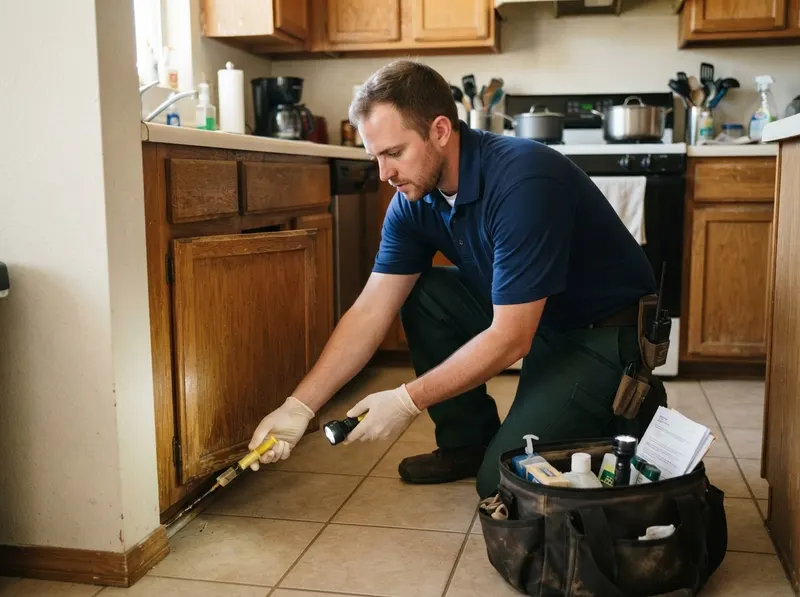
Systematic treatments for American, German, and Turkestan cockroaches targeting structural plumbing wall voids, sewer vent pipes, and outdoor utility valve boxes. Treatments deploy specialized insect growth regulators, micro-encapsulated residual concentrates, and non-repellent gel baits directly into dark moisture zones where cockroaches congregate. This multi-stage approach disrupts reproductive cycles, eliminates egg capsules, and halts outdoor sewer surges without broadcasting toxic spray across open kitchen counters.
Get a quote →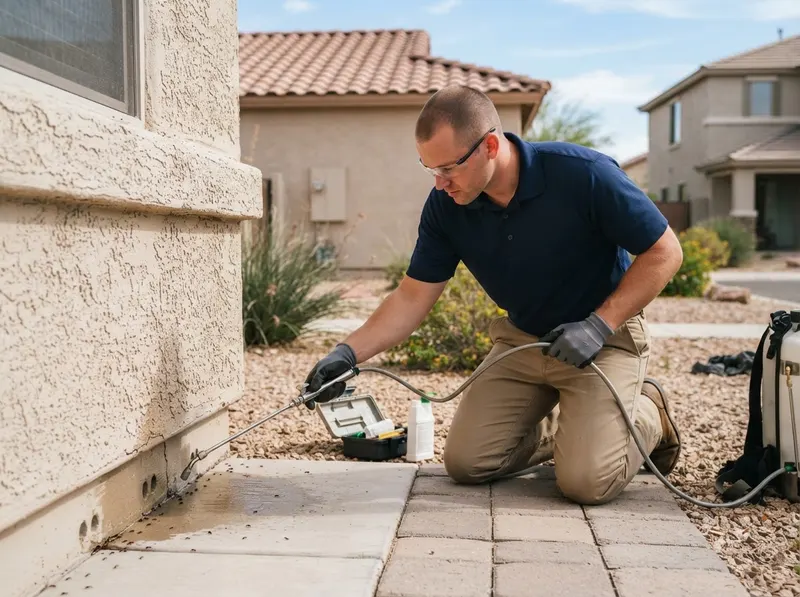
Targeted baiting and perimeter barrier defense against invasive Southern fire ants, rover ants, and pavement ants nesting in desert soil and expansion joints. Non-repellent active formulations are carried deep into the underground queen chambers by foraging workers, achieving complete colony eradication within 3 to 7 days. Exterior treatments establish an invisible protective perimeter along patio perimeters, lawn margins, and concrete walkways to halt recurrent structural foraging trails.
Get a quote →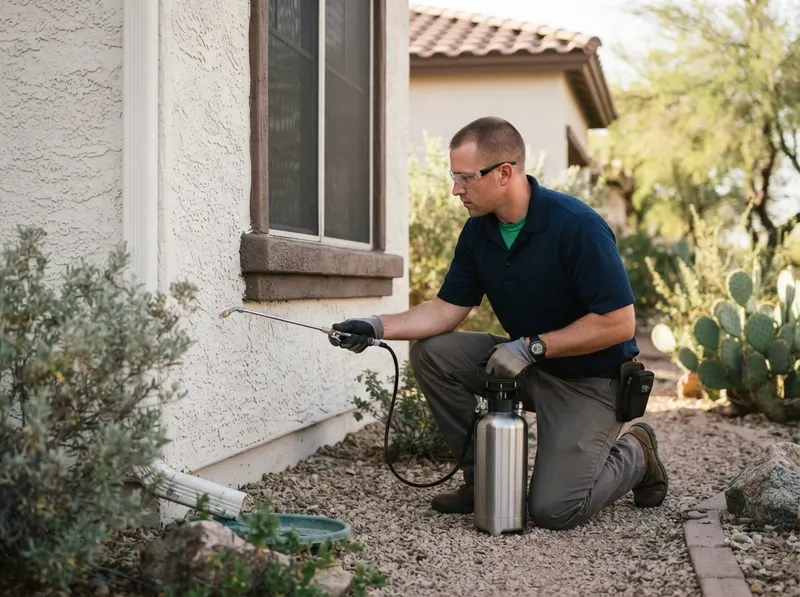
Targeted eradication of black widows, brown recluses, and cellar spiders around building perimeters, garage corners, and patio overhangs. Service includes physical removal of webbing, exterior debris de-webbing using telescoping inspection poles, and targeted residual treatments in dark structural voids, water meter vaults, and decorative block wall pilasters. Technicians eliminate active spiders, egg sacs, and underlying insect food sources to ensure durable outdoor living comfort.
Get a quote →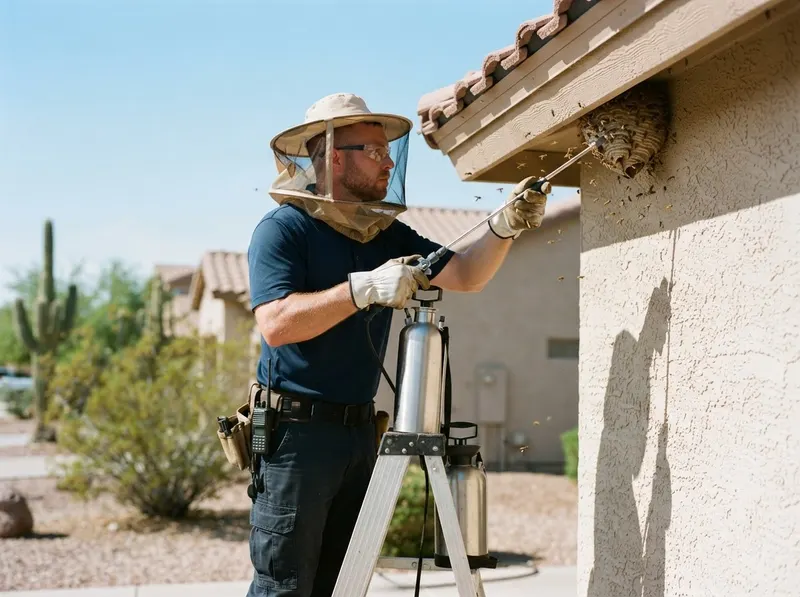
Protective removal of paper wasp nests, mud daubers, and aggressive honeybee swarms sheltered inside structural eaves, parapet walls, and irrigation meter enclosures. Safe knockdown, localized nest void extraction, and preventative repelling applications protect family outdoor spaces. After removing the comb or nest material, technicians treat the structural cavity with residual repellents to neutralize aggregation pheromones and prevent secondary swarms from recolonizing the exact same void.
Get a quote →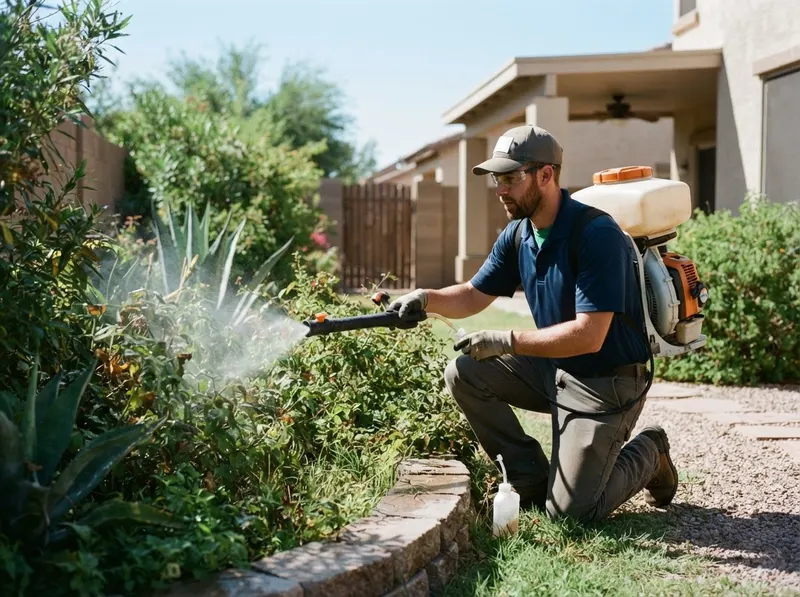
Yard-wide mosquito reduction targeting shaded resting foliage, turf margins, and retention basin drainage areas across residential properties. Specialized backpack misters apply residual adulticides to the undersides of dense desert shrubs, citrus leaves, and covered patio ceilings where mosquitoes rest during peak daylight hours. Treatments integrate biological larvicide dunks in standing water features, landscape drainage sumps, and decorative fountains to neutralize wriggler larvae before emergence.
Get a quote →You get a firm, itemized quote for your pest control service before any work begins, no surprises, no pressure.
Careful prep, tidy work, and a full cleanup when we are done. We treat your home and belongings like our own.
The same trusted, background-checked team from the first call to the final check.
If dealing with visible bark scorpions inside living quarters, nursery baseboards, or shower basins, choose specialized micro-encapsulated perimeter barriers paired with physical weep-screed exclusion rather than standard contact sprays. Standard surface pyrethroids kill scorpions only upon direct contact and leave thin residues that rapidly degrade under Arizona ultraviolet sunlight and sustained 115-degree ground temperatures; micro-encapsulated formulations utilize microscopic polymer shells that survive intense heat, cling to the scorpion's waxy cuticle, and remain active for up to 90 days across masonry stem walls. The trade-off is that micro-encapsulated applications require 24 to 72 hours to achieve full mortality across the population rather than delivering an immediate, toxic knockdown on contact.
If discovering mud shelter tubes along exterior stem walls, garage floor expansion seams, or drywall pinholes, choose non-repellent liquid soil barrier trenching over localized foam injections. Continuous liquid trenching saturates the soil column down to the foundation footing along the entire home perimeter, ensuring foraging worker termites transfer the non-detectable active ingredient back to the reproductive subterranean queen; localized foam treatments address only the single visible activity point while leaving adjacent sill plates, trusses, and wall studs vulnerable to ongoing hidden feeding. If addressing nocturnal attic scratching sounds or fruit damage on residential citrus trees caused by roof rats, choose comprehensive mechanical exclusion and targeted attic snap-trapping instead of outdoor poison bait stations alone.
Mechanical exclusion permanently seals roof eaves, air-conditioning chaseways, and plumbing vents using 16-gauge galvanized mesh, preventing dead rodents from decomposing and emitting foul odors inside finished drywall cavities; exterior bait boxes merely reduce neighborhood rodent populations temporarily while introducing persistent secondary poisoning hazards to household pets and native Sonoran birds of prey.
Every project gets a firm, written price after a free on-site visit. Ranges below for orientation.
Tell us about your pest control service job and we'll send a clear, written quote, usually the same day. Or just call and talk to a real Chandler pro.
(833) 652-9341
Chandler properties encounter acute subterranean termite and roof rat pressures due to a distinct combination of expansive desert clay soils, mature residential citrus trees, and extensive man-made lake systems. In master-planned communities like Ocotillo and Fulton Ranch, waterfront retention basins and lush turf areas create elevated humidity zones that sustain heavy insect breeding, which in turn fuels dense bark scorpion colonies along decorative block walls and travertine patio decking. Mature neighborhood corridors along Alma School Road, Arizona Avenue, and Ray Road feature dense grapefruit and orange canopies that serve as primary foraging corridors for roof rats, which travel along utility lines directly onto residential roofs. Along southern Chandler thoroughfares such as Riggs Road and Queen Creek Road, expansive agricultural conversions and newly excavated desert parcels displace massive subterranean termite colonies directly into the concrete stem walls of newer subdivisions like Sun Groves and Fox Crossing. In historic central neighborhoods near the Downtown Chandler Historic District and Galveston, older post-tension and monolithic concrete slabs frequently display settling cracks that allow subterranean workers to construct mud tubes directly beneath interior flooring. Irrigated recreation zones surrounding Tumbleweed Park, Veterans Oasis Park, and the Bear Creek Golf Complex generate local microclimates that keep night scorpion activity elevated through mid-October, even as surrounding desert soils cool. During the violent wind and rain events of the July and August monsoon season, sudden soil moisture saturation forces scorpions and desert cockroaches upward out of saturated subterranean burrows, driving them into residential stucco weep screeds unless durable, heat-stabilized chemical barriers are maintained along foundation perimeters.
Free estimates for Chandler & the surrounding area.
 Northwind Pest Control